
Teledyne Supports NASA's Artemis II At Every Mission Stage
The Artemis II mission marks an incredible leap in humanity’s aspirations for space travel and exploration and demonstrates the commitment of NASA and its partners to expanding what is possible, bridging the gap between deep space science fiction and fact. The mission is designed to test the Orion spacecraft with a flyby of the moon, a “test drive” that will provide valuable data for future long-duration missions to the moon and, eventually, the first landing on Mars.
The rigorous demands for safety, reliability, and durability for a spacecraft venturing further than any crewed mission before call for best-in-class components that can stand the test from launch to lunar orbit. Teledyne components are Everywhere You Look™ on the Orion spacecraft and launch vehicle, representing our Defense and Aerospace businesses around the globe contributing to a single mission of making deep space exploration a reality.
From structural hardware on NASA’s Space Launch System to global tracking and communications infrastructure, to optical materials and RF components aboard Orion, Teledyne businesses collectively support Artemis II at every phase of the mission lifecycle.
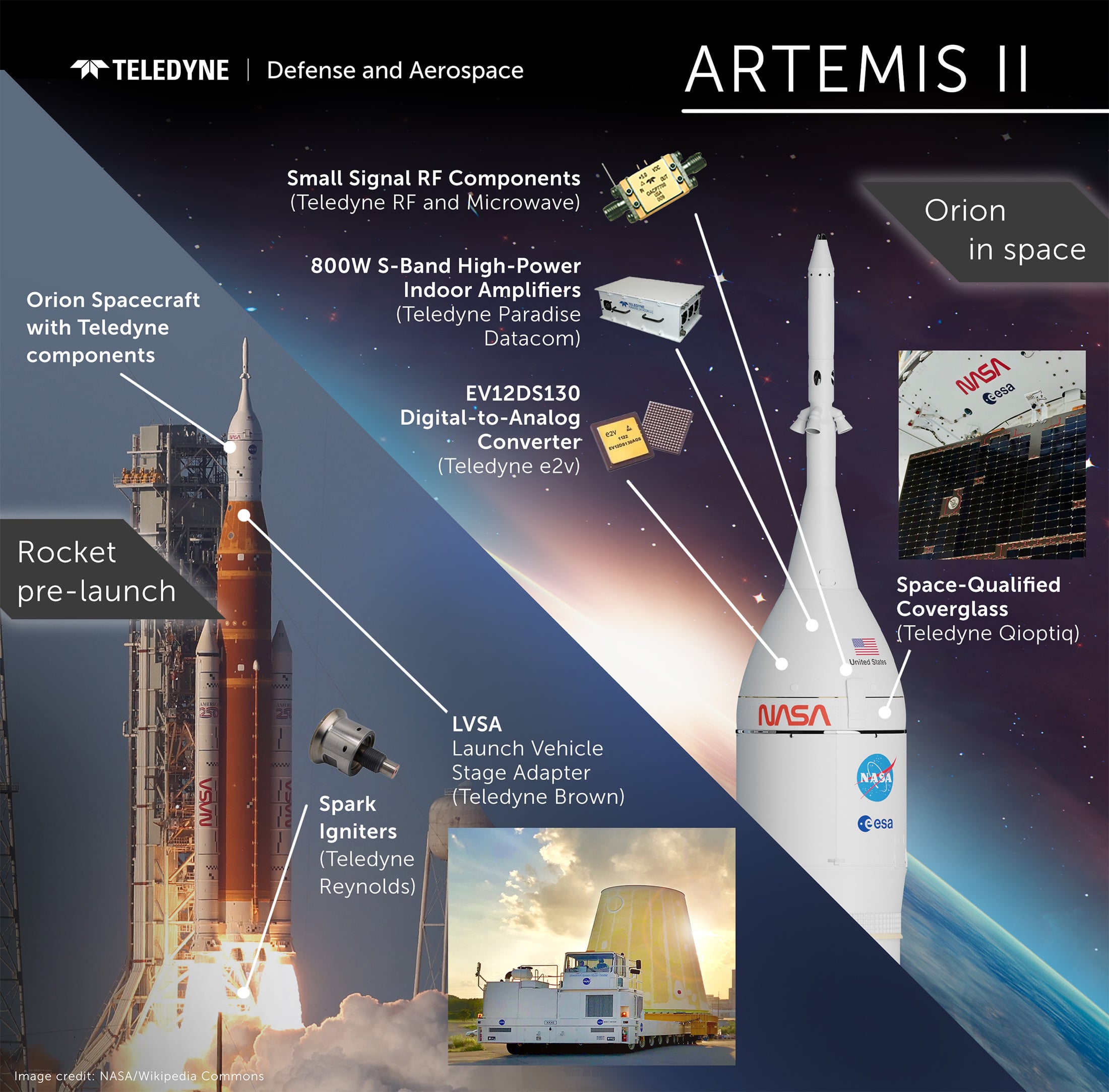
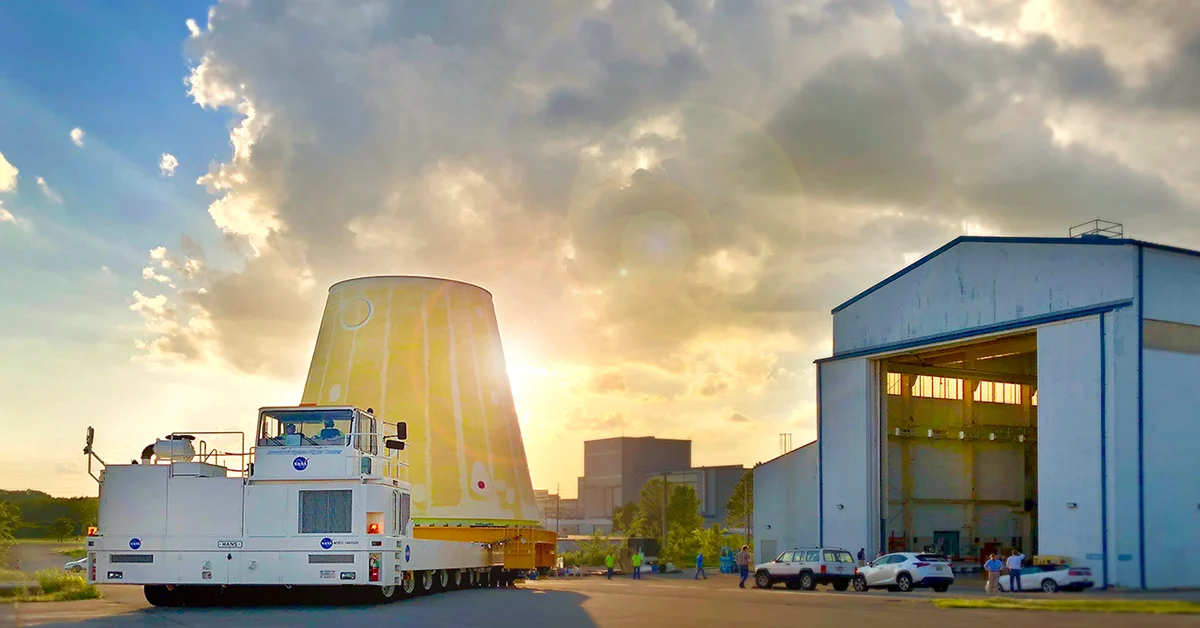
Teledyne Brown Engineering played a foundational role in Artemis II by designing and fabricating the roughly 30 foot tall by 30 foot in diameter Launch Vehicle Stage Adapter (LVSA).
This zero‑margin‑for‑error structural element connects the vehicle’s core stage to the Interim Cryogenic Propulsion Stage. Designed in close collaboration with NASA’s Marshall Space Flight Center for human‑rated spaceflight, the LVSA protected critical systems during launch and separated cleanly during ascent, enabling Orion to proceed on its lunar trajectory.
Teledyne Reynolds manufactures the spark igniters for all four RS 25 main stage engines supporting NASA’s Artemis missions. Each igniter provides the energy required to ignite the oxidizer and fuel pre burners as well as the main combustion chamber, while also serving as the primary pressure seal during engine start, with six igniters installed per engine. Leveraging deep expertise in high voltage hermetic assemblies, Teledyne Reynolds delivered proven hardware that supports safe engine start and overall mission success.
Teledyne Paradise Datacom keeps Orion connected to its home base of planet Earth by enabling a global infrastructure with 800W S-Band High Power indoor amplifiers.
These amplifiers, installed at key tracking sites in the U.S., Europe, and Australia, support communications and tracking for Artemis II during this launch and future missions planned throughout the program life, providing both primary and backup capabilities. This allows for Orion’s precise location and relation to Earth to be tracked at any point.
Teledyne RF & Microwave components are used throughout the Orion spacecraft. These small-signal radio frequency (RF) components support critical functions like communications, navigation, and electrical with integrity over vast distances.
Although largely invisible to the space and ground crews, these nuts-and-bolts components are indispensable in ensuring safety and functionality on board Orion by reliably managing and routing RF signals. This data keeps NASA informed on the spacecraft’s health, status, and navigation, adjusting and addressing issues. Orion can “talk,” “listen,” and operate without fail while traveling far beyond Earth’s orbit because of this technology.
Teledyne e2v contributed its EV12DS130 digital-to-analog (DAC) converter, embedded in the data link of NASA’s Orion spacecraft. This high-speed, high-performance DAC plays a critical role in ensuring reliable data transmission between the crewed capsule and ground systems. By enabling accurate and robust communication throughout every stage of the mission, the EV12DS130 helps support the safety, performance and success of human spaceflight.
Teledyne Qioptiq supplied the space-qualified coverglass for Orion’s solar arrays.
Incorporated into the spacecraft’s power system, the coverglass protects solar cells from radiation, atomic oxygen, and extreme thermal cycling while maintaining the optical performance needed to power the mission. If solar cells degrade or fail, Orion loses power margin. In a crewed deep-space mission, reliable power is a matter of life and death. This coverglass is the first line of defense between the fragile solar cells’ surface and an unforgiving space environment, which is why with over 50 years of experience and over 30 million space-qualified components delivered, Teledyne Qioptiq brings confidence to this most critical mission.
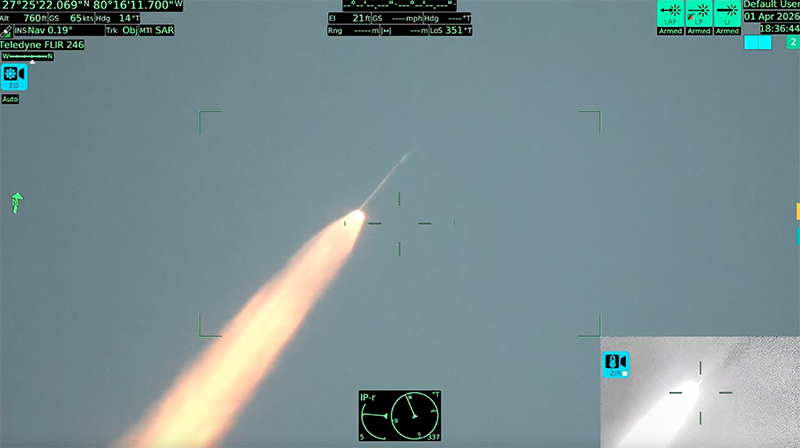
Teledyne FLIR Defense was conducting airborne flight demonstrations about 70 miles from Kennedy Space Center on April 1st while Artemis II was taking to the skies, and captured EO/IR imagery of the launch with its advanced airborne Star SAFIRE 380X-HDc imaging system. See history as captured by the system in the video:
From mission control to the far side of the moon, Teledyne technologies support Artemis II with collaboration and components that span the spacecraft’s structure, sensing, communications, power, electronics, and observation. As “One Teledyne,” the future of deep space missions is truly limitless.
Related Articles
-
 Case Study
Defense Brings the Power of Collaboration to National Robot Rodeo
Read the Story -
 Case Study
Substance of the Month: Pink Cocaine
Learn more -
 Use Case Scenario
‘Chopper Cops’ and Star SAFIRE 380X Docuseries Q&A
Read the Story