
Defense Brings the Power of Collaboration to National Robot Rodeo
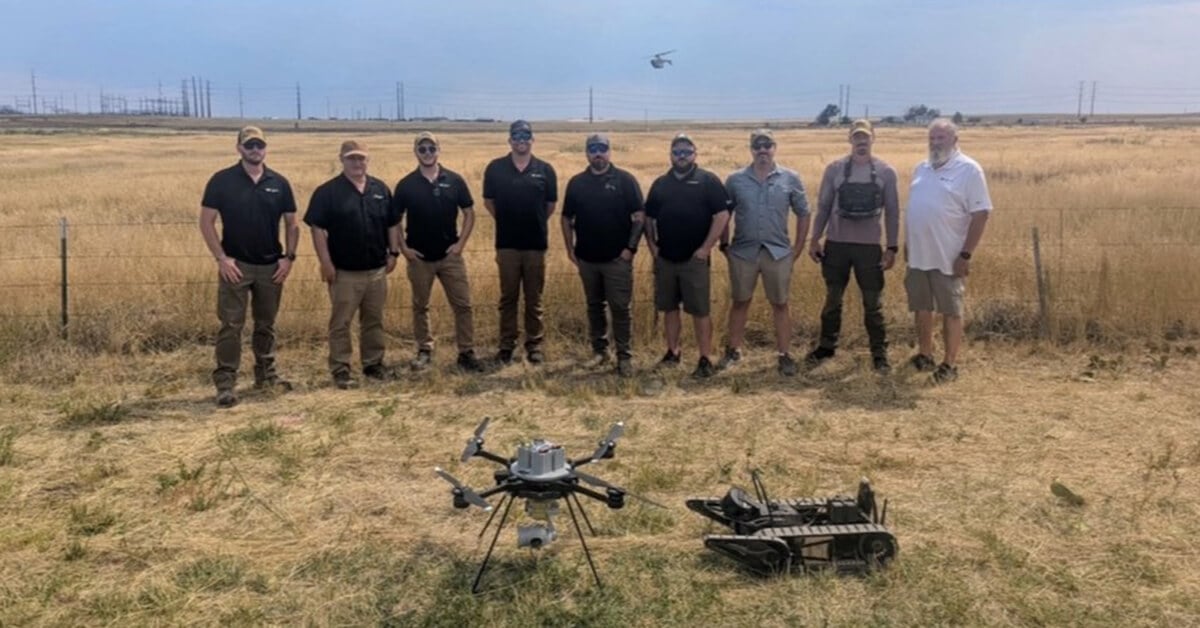
As unmanned aerial and ground systems become ever-more influential for public safety and military bomb squads, the National Robot Rodeo has grown as an essential opportunity for showcasing new breakthroughs and evaluating emerging projects. In rotating, rugged locations throughout the country, this annual tech competition allows industry leaders to collaborate alongside expert military and safety personnel. Through the days of trainings and demos, the rodeo is an indispensable opportunity for participants to explore and align on what's working and what's needed to address emerging explosive threats.
The rodeo is a collaboration between the Air Force Civil Engineering Center, Department of Homeland Security, Cybersecurity and Infrastructure Security Agency, Office for Bombing Prevention, the EOD Technology Center at Naval Surface Warfare Center Indian Head Division, the Sandia National Laboratories, and the United Kingdom Defence Science and Technology Laboratory. In addition to the military and police on-site, international allies also attend, making it a well-anticipated gathering for the wider Department of Defense community.
Teledyne FLIR Defense has attended for many of the eight years that the National Robot Rodeo has taken place, but this year was the first event where we have presented an integrated ground and air solution beyond the conceptual or demo phase. Our multi-domain scenario, unveiled at this years' event in August, included the Black Hornet 4, SUGV™ 325, SkyRanger® R70, FirstLook® 110, and MUVE® R430 sensor all working together to address a real-world threat.
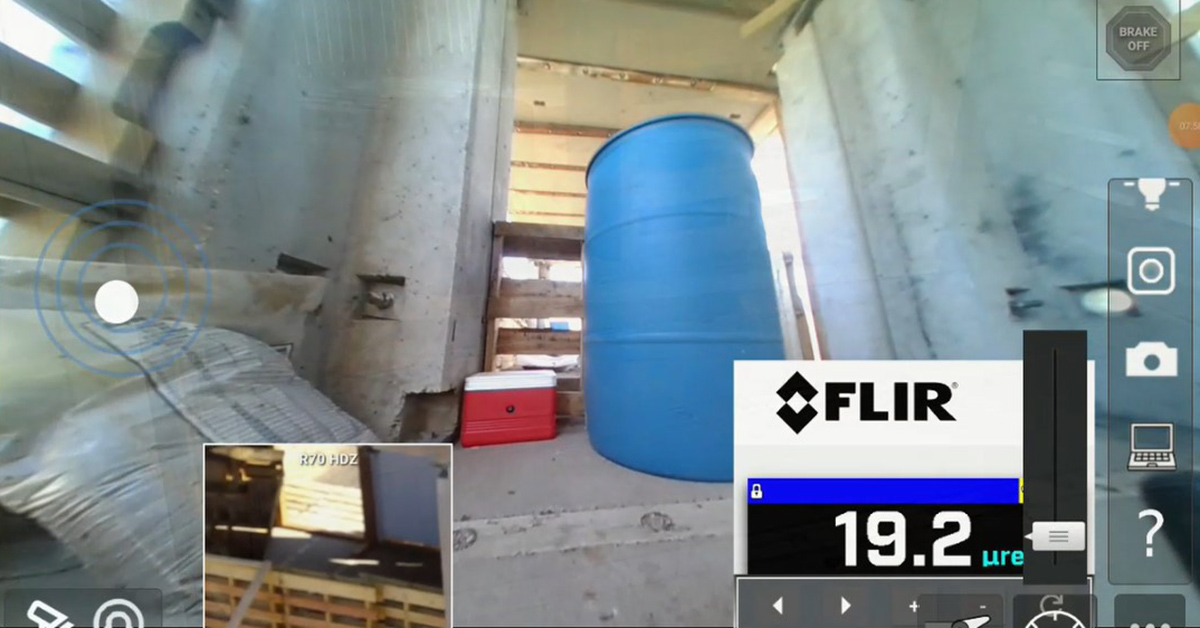
The product mix allowed each solution to shine with its particular strengths as part of a complete response:
- Black Hornet 4 discretely flying down-range to pinpoint if and where a threat existed
- SkyRanger using the Black Hornet's findings to arrive in the precise location with a more robust camera
- LIDAR 3D mapping software begins layering images from the UAS solutions to create an accurate map of the terrain (including buildings and their contents, as in the images below)
- SUGV arrives to address potential threats identified through the aerial units guided by the generated map
- SUGV works in tandem with the R430 sensor to find the hidden explosive device and address without the need for human intervention
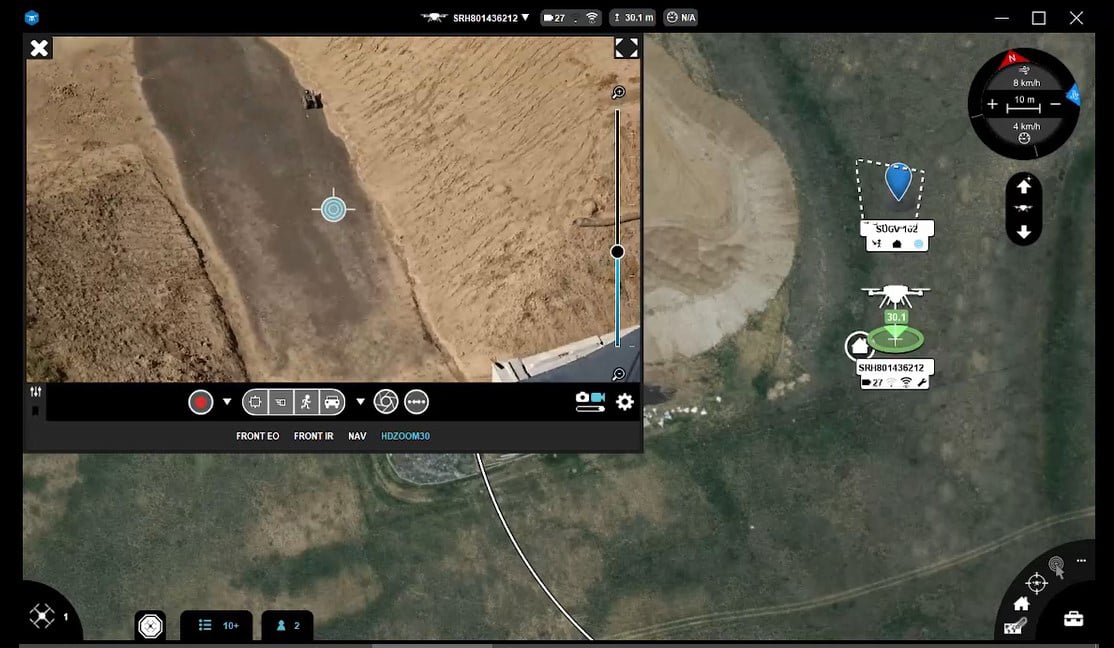
LIDAR multi-screen mapping and tracking
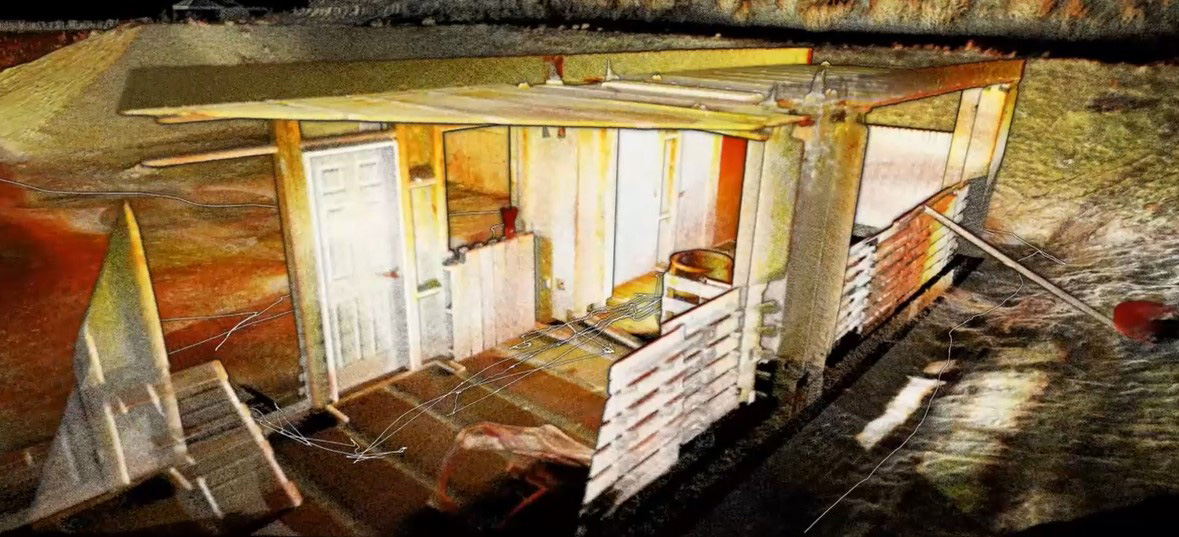
Complete building image created by layering images obtained through the unmanned equipment
"When you show customers a single solution, it's like saying, 'here's a hammer,' instead of 'here's how you build a shed," said Nate Winn, Director of Product Management. "The Robot Rodeo is a great chance to demonstrate what happens when we layer all those separate ideas into unified practice."
Since the National Robot Rodeo is a competition between participating agencies on who can resolve their missions with the best speed and accuracy, it's important for the solutions demonstrated not only to be reliable, but quick to learn. Teledyne FLIR Defense's solution was continually praised by attendees for its ease of use, with Defense employees training participants in a matter of minutes to fly the Black Hornet 4 and SkyRanger without crashing. The automatic 3D mapping with LIDAR was also generating game-changing buzz, replacing the previous method of relying on operators to hand-draw maps from received images to try and guide critical, time-sensitive missions. Through these interactions, our team also received vital feedback from actual users that will guide continual refinement and roll-out in the coming months and quarters.
Special thanks to the cross-collaborative team of Dan Cross, Steve Pedrotty, Mike Treusch, Jack Davis, Jason Turner, Chris Brown, Nate Winn, Matt Smith, and Gary Gaudet for your hard work planning and assisting on-site with this year's event. We're excited to see what you wrestle up for the rodeo next year as we continue to collaborate across Defense domains!
Related Articles
-
 Case Study
Substance of the Month: Pink Cocaine
Learn more -
 Download
This is Teledyne FLIR Defense Video Release
Read the Story -
 Use Case Scenario
Mapping Oregon Wildfires with Teledyne FLIR Star SAFIRE 380-HDc
Read the Story