
Press Release
Teledyne FLIR Defense Captures Contracts Worth Up to $47M to Provide Wide Range of Ground Robots to US Government
READ THE STORY >>
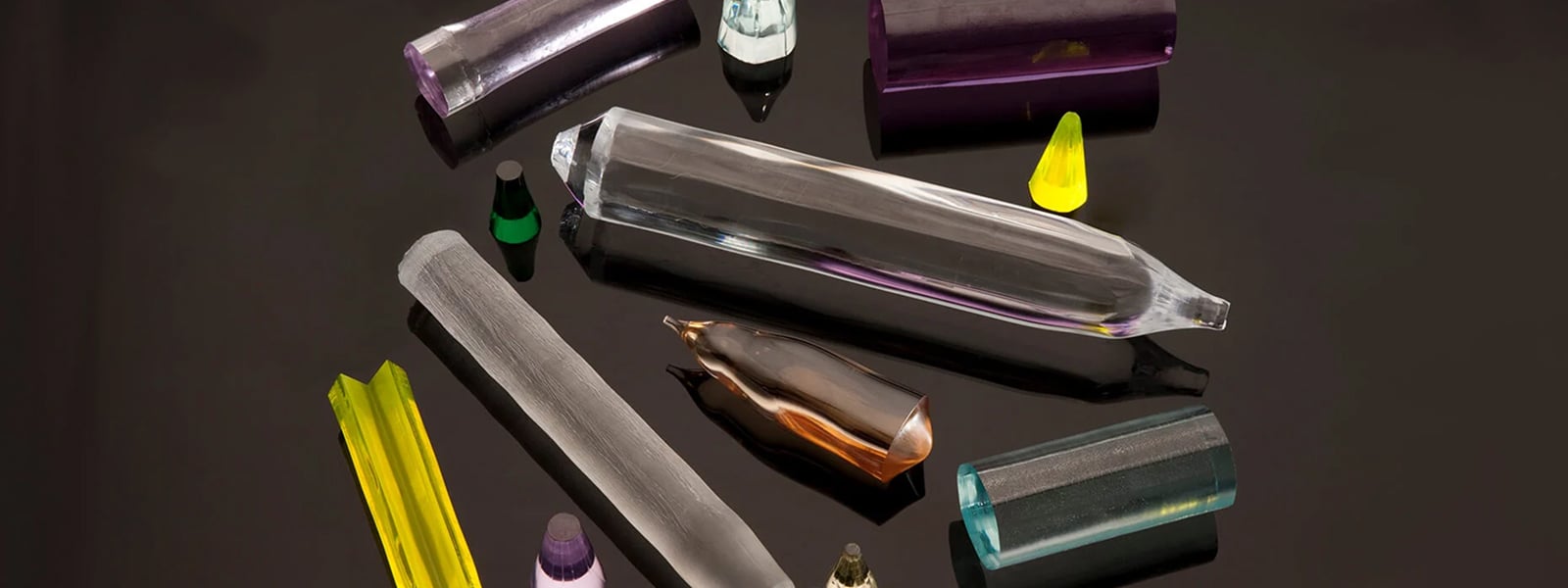
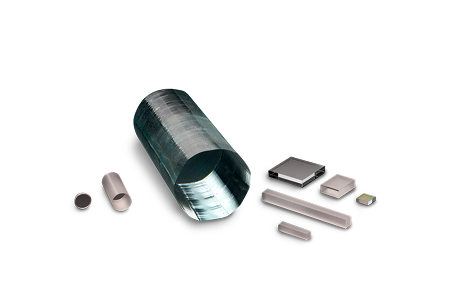
Crystals doped with trivalent ytterbium (Yb³⁺) have demonstrated significant potential for application in compact, efficient, diode-pumped laser systems.[1-4] The Yb³⁺ ion has only two manifolds, the ground ²F₇⸝₂ and the excited ²F₅⸝₂ which are separated by approximately 10,000 cm⁻¹. As a result, Yb³⁺ doped materials have spectroscopic and laser properties that are advantageous for high energy 1 μm laser systems. In particular, Yb³⁺ doped materials should not suffer from concentration quenching, upconversion, or excited state absorption. The Yb³⁺ion also has a long energy storage lifetime (typically three to four times that of Nd³⁺ in the same host) and a very small quantum defect which reduces heat generation during lasing.
Teledyne FLIR Defense Captures Contracts Worth Up to $47M to Provide Wide Range of Ground Robots to US Government
READ THE STORY >>
Teledyne FLIR Airborne Imaging Systems Bring New Perspective to Storytelling in Paramount+'s Summer Hit Series, CHOPPER COPS
READ THE STORY >>
Teledyne FLIR Defense Awarded $74.2M Contract for U.S. Army’s Next-Gen Nuclear, Biological and Chemical Reconnaissance Vehicle Sensor Suite Upgrade
READ THE STORY >>The information contained in this page pertains to products that may be subject to the International Traffic in Arms Regulations (ITAR) (22 C.F.R. Sections 120-130) or the Export Administration Regulations (EAR) (15 C.F.R. Sections 730-774) depending upon specifications for the final product; jurisdiction and classification will be provided upon request.
